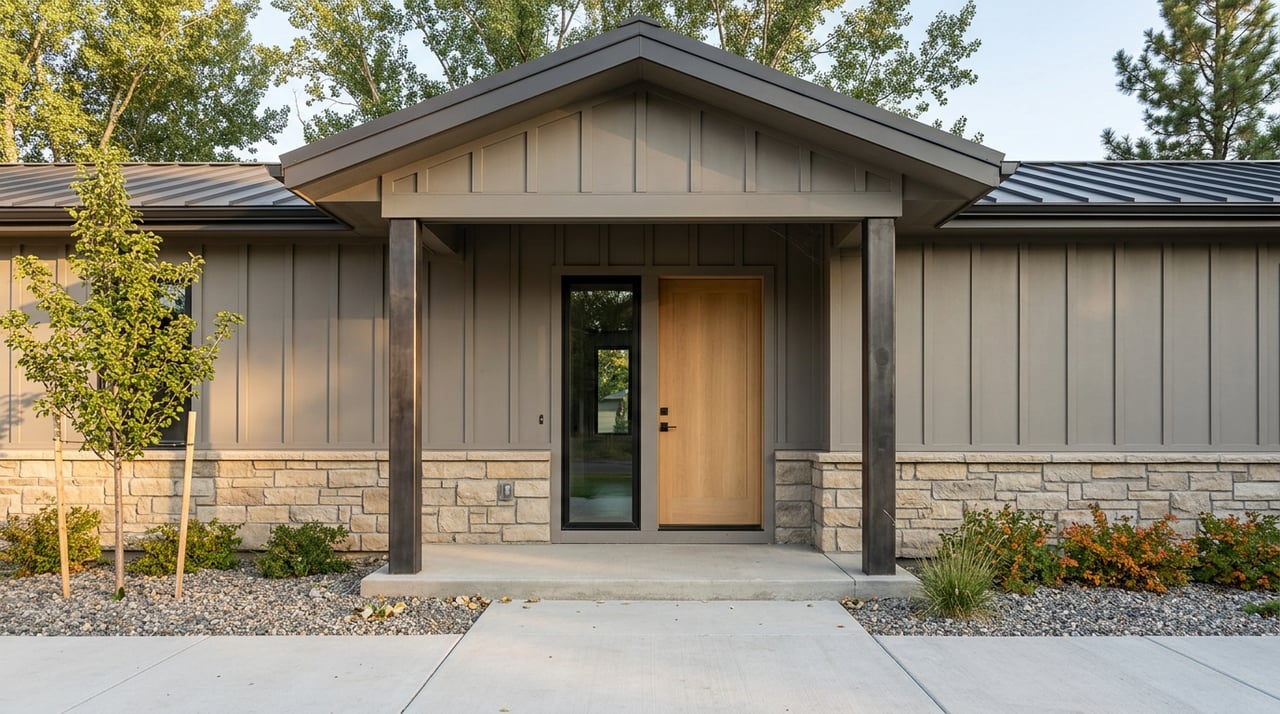
On September 19, 2024, Carolyn and Tim Rawson were one day from closing on what they called their forever home in Red Rocks Ranch. Then a Lennar representative called. There was no water meter for their unit, so there would be no closing. Carolyn later told the Canyon Courier, "We got less than 24-hours notice." Movers were already booked.
The Rawsons weren't alone. Thirty-eight other buyers hit the same wall that week, some in hotels, some in Airbnbs, some living out of moving vans while their finished homes sat a few miles east of the town of Morrison with no water service. Lennar's division president, Jason Nazarenus, told the town board his company was "dedicated at Lennar to helping Mount Carbon get through what they need to." The Mount Carbon he meant is the Mount Carbon Metropolitan District, the special district that governs water and sewer for Red Rocks Ranch. Its shortfall, not the buyers' financing or inspection, is what kept 39 closings from happening on schedule.
If you're evaluating a home in Red Rocks Ranch today, the paperwork you'll hear about most is the Tax Certificate. It's a real document with a real purpose. It is also not the document that explains what happened to the Rawsons, and understanding that gap matters more than knowing the mill levy.
The document that was supposed to catch this
Colorado's standard residential contract requires the seller to deliver a signed Tax Certificate disclosing any special taxing or metropolitan districts affecting the property, and that certificate has to reach the buyer on or before the Record Title Deadline. If the content is unsatisfactory to the buyer, in the buyer's own subjective judgment, the buyer can terminate. That language is spelled out in the current version of the Colorado Contract to Buy and Sell Real Estate, effective for contracts written on or after January 1, 2026.
Separately, state law has required since January 1, 2024 that a seller inside a metropolitan district organized on or after January 1, 2000 hand the buyer the district's official website. It's a useful rule, but read the date threshold again. Mount Carbon was formed in 1976 as the Mount Carbon Water and Sanitation District and converted to a metropolitan district in 1982, both well before the year 2000 cutoff written into the statute. That means the mandatory website disclosure that protects buyers in most newer Front Range metro districts may not technically reach this one. It's worth asking your title company directly whether that specific duty applies here, rather than assuming it does because the development is new.
Either way, the Tax Certificate answers a narrower question than most buyers think. It tells you the mill levy. It does not tell you whether the utility system behind that mill levy can actually deliver water on your closing date.
Why the certificate didn't stop the water crisis
A correctly completed Tax Certificate in September 2024 would have shown Mount Carbon's tax rate accurately. It would not have shown that the district's new water treatment plant wasn't finished, or that Morrison had already issued the development 444 residential taps against a system built for a much smaller town. Morrison has fewer than 400 residents, and more than half of them live in the town's nursing home, according to census figures cited in later reporting. Town Trustee Paul Sutton put the mechanical reality plainly: "We are losing slack in our system." Fellow trustee Katie Gill was more direct about who bore responsibility, telling the board, "We don't want to get ahead of ourselves and sell water we can't serve."
The taps eventually came through. On October 8, 2024, the town approved converting two irrigation meters into 39 residential taps, and Mount Carbon agreed to install new chemical pumps and a fiber line to help the town monitor water levels going forward. But even that fix was partial. A July 2025 report on the development noted the community's splash pad and playground still sat behind fencing, unopened, because the taps released that October covered homes, not shared irrigation. One resident described watching newly planted landscaping brown through the summer while waiting for the broader system to catch up.
What the 2025 agreement actually promised
The underlying friction traced back to a 2008 intergovernmental agreement between Morrison and Mount Carbon, amended eight times since. On July 28, 2025, the two parties approved a full restatement of that agreement. Under the new terms, Mount Carbon agreed to pay the majority of the cost to build a diversion, pump station, and pipeline on Bear Creek, infrastructure the town needs to access additional water rights for the development. Ed Kubly, a Mount Carbon board member, called the resolution "very much so a relief." Morrison Mayor Chris Wolfe said his focus was on the families still waiting, telling reporters he was "hopeful they can get into a house soon."
Not everyone was satisfied with the math. Gill, who had left the town board by then, flagged that Mount Carbon's committed contribution to the new pump station, roughly $97,000, was pitched as 78 percent of the total cost, with the town covering the rest. She questioned whether a pump station could really be built for the stated total and whether Mount Carbon's obligation would grow if costs ran over. The agreement's language, as written, didn't require it to.
The rate increase moving through in 2026
That question about who absorbs rising costs didn't stay hypothetical for long. On May 27, 2026, the Canyon Courier reported that Morrison's own financial advisor, Hilltop Securities, had recommended utility rate increases for water customers both inside town limits and at Red Rocks Ranch. Hilltop's managing director, Jason Simmons, told the town board that "some significant increases in the monthly fees for your utility users are going to be required." Town Manager Mallory Nassau confirmed that the plant expansion and Bear Creek diversion construction are contractually obligated, meaning Morrison can't simply defer them. The increases won't stop at Red Rocks Ranch either. Morrison also supplies water and sewer to Red Rocks Amphitheatre, so that account is expected to see the same pressure.
This is the piece that rarely makes it into a closing conversation. A mill levy is a fixed, disclosed number you can find on the Tax Certificate. A utility rate is a separate line item, set by resolution rather than by the tax rolls, and it can move well after your closing date based on capital obligations the district signed up for years earlier. In Red Rocks Ranch, that capital obligation is not theoretical. It's the direct legacy of the 2024 water crisis, now working its way into a rate case.
What to actually ask before you remove contingencies
- Request the Tax Certificate through your Record Title Deadline and check the district's organization date on it, not just the mill levy. If it predates 2000, confirm with your title company whether the statutory website disclosure duty applies to this specific district.
- Ask for written confirmation of current water tap status for the specific unit you're buying, not a general statement about the development.
- Ask whether the unit has ever been served through a temporary or converted meter, and if so, when it's scheduled to convert to standard service.
- Pull the town's posted intergovernmental agreements directly. Morrison's Public Works department has published the original 2008 agreement, all eight amendments, and the 2025 restatement on its own site, and reading the actual document beats a secondhand summary.
- Ask the district or the town for the status of the Hilltop Securities cost-of-service study and whether a rate schedule has been adopted yet, since that number affects your monthly carrying cost the way the mill levy affects your annual one.
A few quick answers
Is the water situation resolved for homes already built? Reporting through mid-2025 indicates most finished homes have standard water service, though shared amenities like the community splash pad were still catching up as of that summer. Confirm current status for the specific phase and filing you're considering, since construction was still active on the development's east side as of last year.
Does the Tax Certificate cover the utility rate increase? No. The Tax Certificate discloses ad valorem taxes and the district's mill levy. A utility rate increase is set separately, typically by district or town resolution, and won't appear on that document.
Is Mount Carbon still on the hook for the infrastructure costs? Under the July 2025 restated agreement, yes, for the majority of the diversion and pump station costs. Whether that holds if construction costs exceed current estimates is the open question Gill raised, and it's worth asking the district directly for its current budget rather than relying on the original agreement's language.
Red Rocks Ranch is still one of the more interesting corners of the Morrison market, and none of this is a reason to avoid it. It's a reason to ask sharper questions before you waive your contingencies. If you're weighing a new build there against an in-town Morrison resale, I can walk you through exactly which documents to pull and when, so the mill levy and the water bill are both numbers you understand before you sign rather than after. Laura Gilsdorf — Let's Connect.