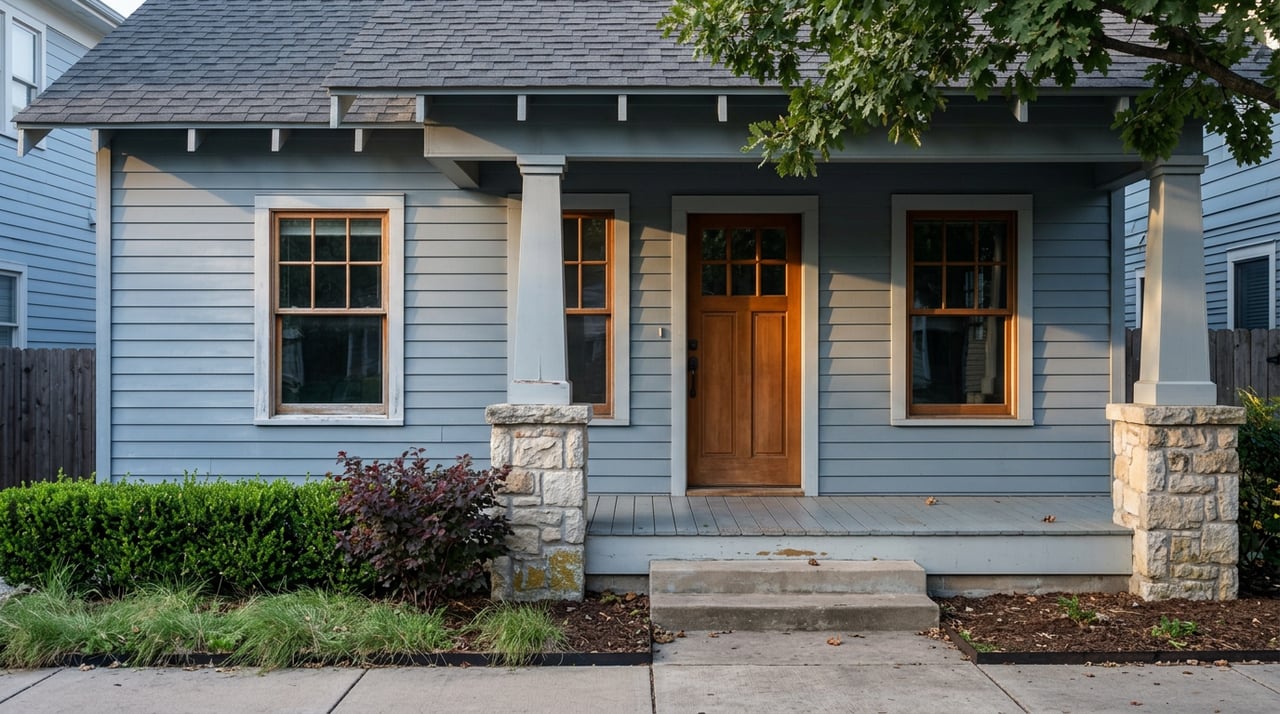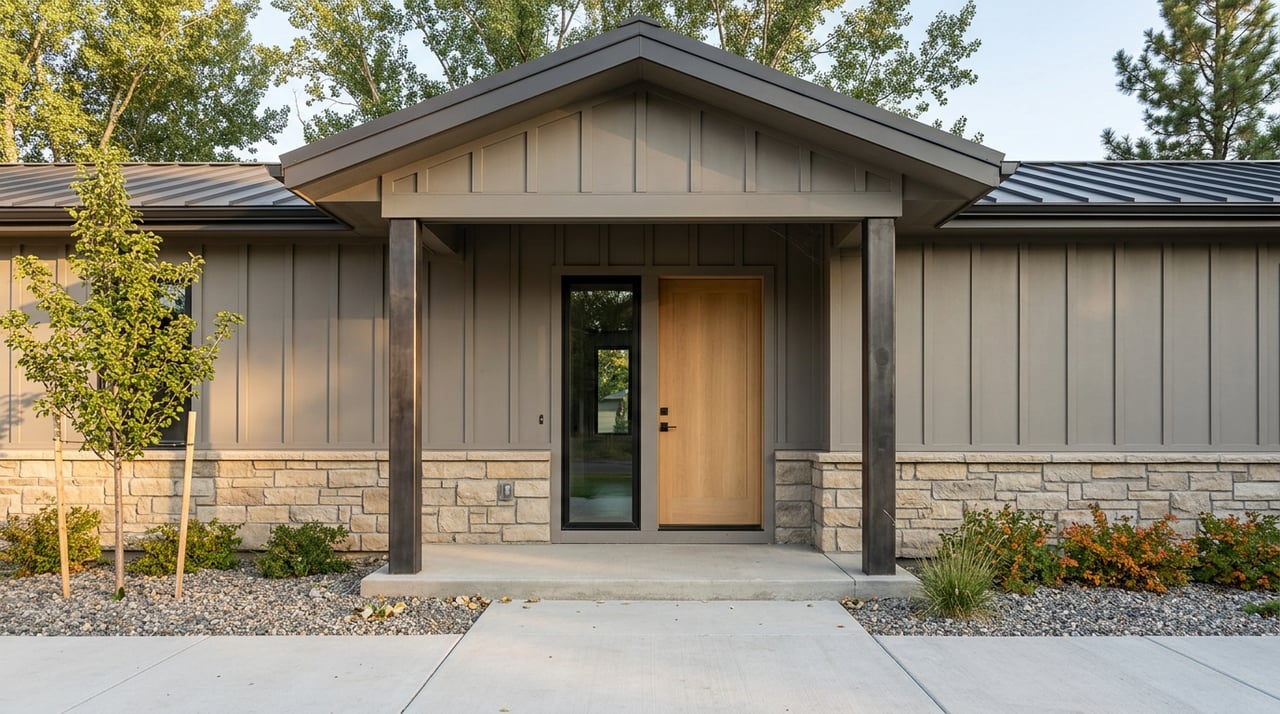
"I thought it was very restrictive, that it kind of freezes our housing, residential housing, to where it was back in January of last year," Littleton Mayor Kyle Schlachter said in January 2026, describing a ballot measure his own city council had watched voters approve over his objection two months earlier.
He was talking about zoning. But he was also, without quite meaning to, explaining why Littleton's citywide median home price has barely moved this year while listings six blocks from Main Street get bid up like it's 2021. The two facts look contradictory until you understand the vote that sits between them.
The vote most Littleton buyers never heard of
In January 2025, Littleton City Council was ready to pass an ordinance opening the door to duplexes, triplexes, and small multiplexes in neighborhoods that had allowed only single-family detached homes. City planners called it "missing middle" housing: the duplexes, triplexes, accessory dwelling units, cottage court communities, and small multiplexes that once existed in most American towns and now largely don't, because zoning codes wrote them out. The stated goal was more supply, spread across more of the city, at a wider range of price points.
Residents pushed back hard enough that council shelved the idea. A group called Rooted in Littleton, led by board member Mark Harris, kept going. His group ran its own survey, gathered more than 2,000 endorsements, and collected enough signatures to put a citizen-written charter amendment, Ballot Question 3A, on the November ballot.
Voters approved it on November 4, 2025, on a ballot that also carried a handful of other local and statewide measures. Question 3A freezes Littleton's residential zoning as it existed on January 1, 2025, undoing a recently passed update to accessory dwelling unit rules and permanently shelving the missing middle rezoning council had considered. Because the freeze now lives in the city charter rather than in an ordinance, reversing it requires another citywide vote, not a council decision.
Why a frozen zoning map redirects demand instead of erasing it
None of this made fewer people want to live in Littleton. It just changed where the supply of homes that fit their budget and lifestyle can come from.
Before the freeze, a lot in an ordinary residential zone could theoretically become a duplex or a small multiplex someday, adding a housing option that didn't exist before. After the freeze, that lot stays exactly what it is. The only places where buyers can get walkability, transit access, and trail proximity all in one package are the places that already had that combination built in decades ago, and that supply cannot expand to meet new demand.
That is the mechanism behind the split you're seeing in the numbers.
What the divided market actually looks like right now
The clearest neighborhood-level breakdown available comes from an analysis covering the twelve months ending in June 2025, which required at least 20 closed sales per area before reporting a number, specifically to avoid letting one expensive closing swing a small sample. In that window, citywide Littleton sat close to flat, around $600,000 and down roughly 1.3% from the year before. Individual pockets told a different story:
| Area | Year-over-year change (12 months ending June 2025) | Median sale price | What's nearby |
|---|---|---|---|
| Citywide Littleton | About -1.3% | Around $600,000 | Baseline for comparison |
| Historic Downtown Littleton | +20.8% | $725,000 | Main Street, the RTD Littleton•Downtown light rail station, the Mary Carter Greenway |
| Ken Caryl (80127) | +9.6% | $707,000 | Established amenities, homes moving in under three weeks |
| Ketring Park | +12.4% | Not separately reported | Ketring Lake, the Littleton Museum, Bemis Library |
| 80123 | +5.2% | Not separately reported | Broader southwest Littleton, still inside the walk-and-ride radius |
More recent citywide data shows the flat pattern held. Redfin put Littleton's median sale price at $629,000 over the three months ending in May 2026, down about 0.9% from the same period a year earlier. The citywide number has barely budged in a year. The pockets built around Main Street, the light rail, and the trail network are the ones that moved.
Every one of those outperforming pockets shares the same trait: they're already built out with the exact mix that a missing middle rezoning would have tried to replicate elsewhere. You can walk from Historic Downtown to Main Street, catch the light rail into Denver, or pick up the Mary Carter Greenway along the South Platte without touching a car. Ketring Park buyers get the lake, the museum, and Bemis Library within a short walk of transit. None of that acreage can be manufactured on a different block. When the regulatory tool that might have spread comparable options citywide gets taken off the table, demand doesn't disappear. It piles into the finite footprint that already qualifies.
Two prices for the same six blocks, a lesson in small numbers
Here's where a buyer doing their own research can get tripped up. Redfin's own neighborhood page for Historic Downtown Littleton showed a median sale price of $1.3 million in December 2025, up 73.8% year over year, a very different number from the $725,000 and 20.8% figure cited above.
Both can be accurate and still tell different stories, because they're measuring different things. The $725,000 figure came from an analysis that required at least 20 closed sales in a twelve-month window before it would report a neighborhood number, specifically to prevent one expensive closing from swinging the whole result. Historic Downtown Littleton is a small area. When a dataset doesn't apply that kind of floor, a single high-end sale in a low-volume month can move the median by six figures overnight.
The takeaway isn't that one source is wrong. It's that hyperlocal medians in small neighborhoods are volatile in a way citywide medians aren't, simply because there are fewer transactions to average. Before you anchor a decision to a headline percentage for a specific pocket of Littleton, ask how many actual closings that number is built on.
What this means if you're shopping the flat number right now
A citywide median in the low $600,000s can make Littleton look calmer than it is. If your search is centered on Historic Downtown, Ken Caryl, or the streets around Ketring Park, you're not competing against that citywide average. You're competing against buyers who already know those specific pockets can't get more supply and are pricing that scarcity in now.
A few things worth doing differently because of it:
- Ask your agent for closed sales in the specific blocks you're considering over the past three to six months, not a citywide or ZIP-code average. The gap between those two numbers is the whole story right now.
- If walkability to Main Street or the light rail station matters less to you than to the next buyer, look at streets just outside the tightest walk zone. You often keep access to the same parks and trail connections without paying the premium for being inside the six or eight blocks everyone else wants.
- Don't plan around the idea that new missing middle inventory will loosen up competition in these pockets soon. Because the freeze is now in the charter, that would require another citywide vote, not a policy change at a council meeting.
Questions Littleton buyers are actually asking
Does Ballot Question 3A ban accessory dwelling units entirely?
No. Rooted in Littleton has said the measure allows individual property owners to seek their own variance for an ADU. What it undoes is the 2025 ordinance update that had made ADU rules easier to navigate citywide, and it prevents future citywide zoning changes without another public vote.
Could Littleton reverse the freeze later?
Only through another citizen-initiated ballot measure that voters approve. Because 3A amended the city charter rather than an ordinance, council cannot simply vote to undo it.
Does this same pattern show up in condos and townhomes?
The neighborhood-level data available right now is built primarily from single-family home sales. If you're specifically shopping attached housing in Historic Downtown or Ken Caryl, ask for that breakdown directly. It isn't reported separately in the sources behind this analysis, and attached-home dynamics can move differently than detached ones even within the same zip code.
If you're trying to figure out which side of this split a specific street falls on, that's exactly the kind of block-by-block read that a citywide average can't give you. Laura Gilsdorf can pull the actual recent closings for the pocket you're considering and walk you through what the zoning freeze does and doesn't change for your search. Let's connect.